
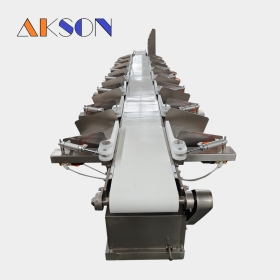
Belt-Type Weight Sorting System: Eliminating Subjectivity and Enhancing Precision in Product Sorting
In industrial manufacturing, accurate weight-based sorting is critical. However, many manufacturers once underestimated this need. Initially, they relied on manual weighing and sorting. This process was labor-intensive. It also suffered from low throughput. Operator fatigue caused inevitable human errors. Consequently, such inconsistencies led to misgraded products. For example, oversized items might go into undersized packages. Undersized items could mix into oversized lots. Thus, product uniformity suffered. Brand integrity declined. Customer satisfaction dropped.
Later, manufacturers adopted platform and electronic scales. These tools improved measurement accuracy. However, they failed to resolve fundamental workflow bottlenecks. Each item required individual placement. Then an operator weighed it. Next, they removed it. Finally, they manually sorted it. Therefore, throughput gains remained marginal. Scalability stayed limited.
Then the belt-type weight sorting system emerged. It represented a paradigm shift. This system delivers fully automated sorting. It operates at high speed. Moreover, it provides metrologically rigorous capabilities.
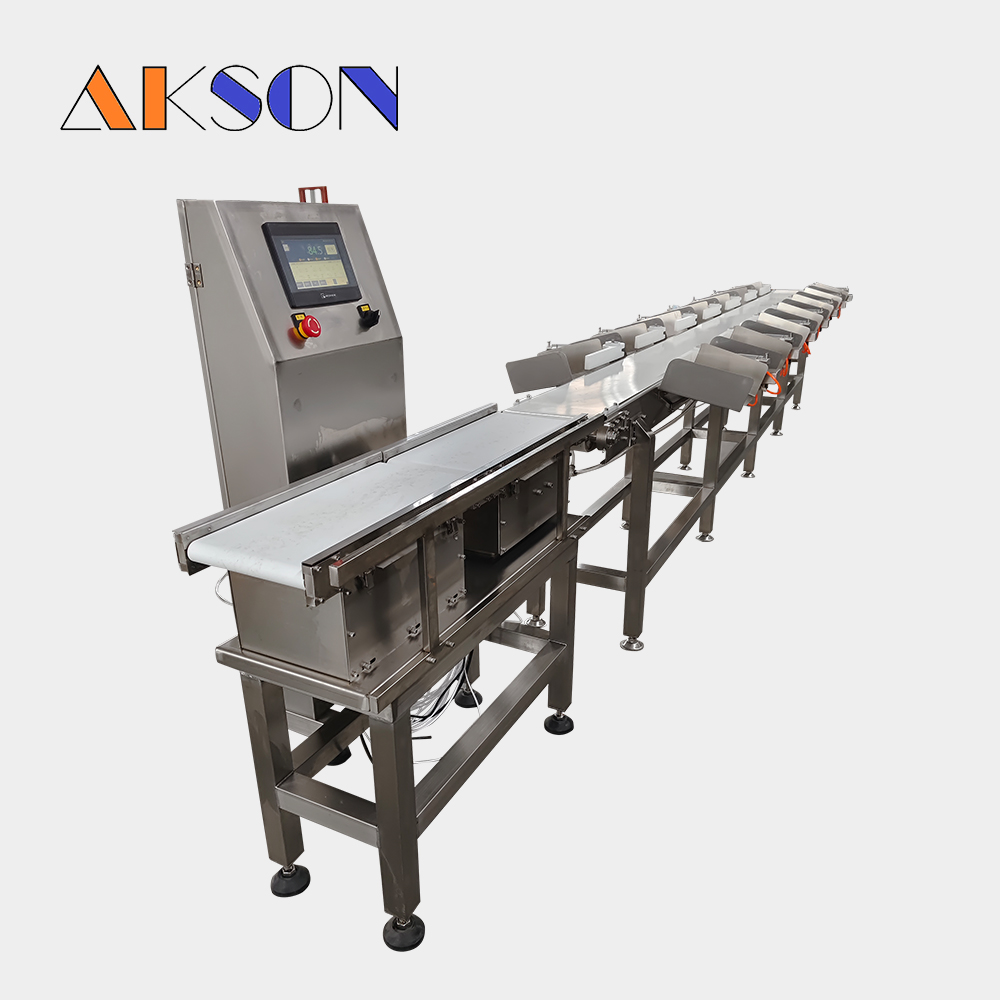
What is a belt-type weight sorting system?
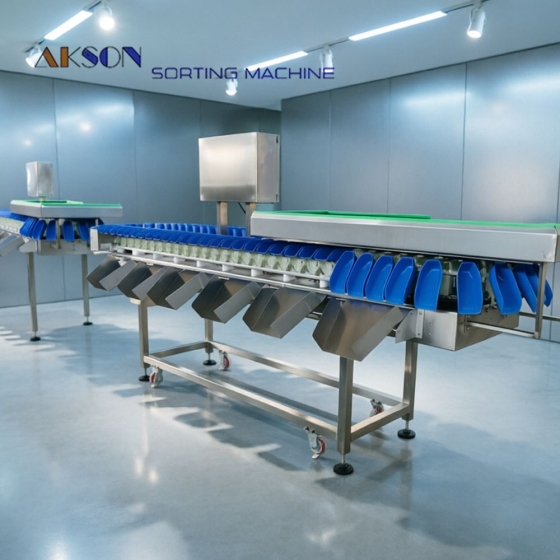
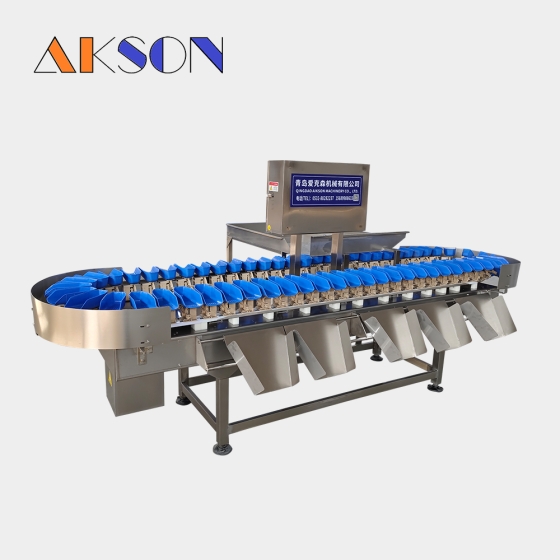
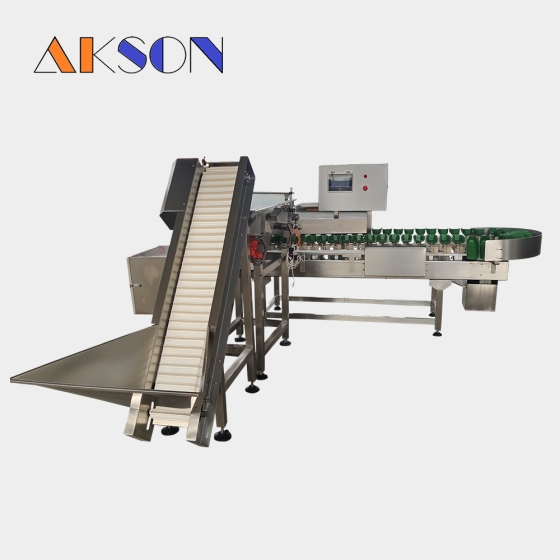
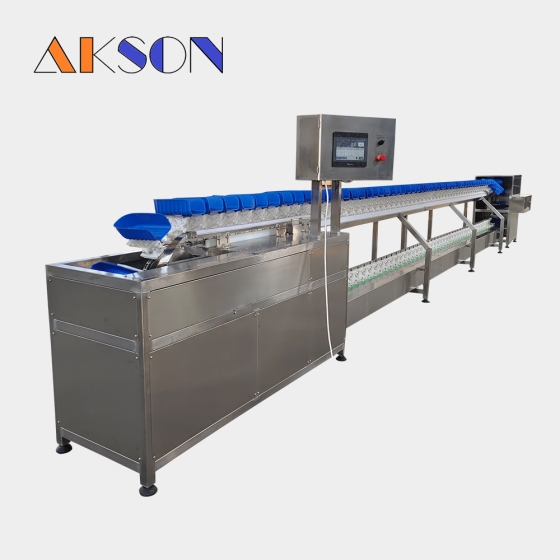
It is an integrated, PLC-controlled automated system. It performs continuous, in-line weight verification. Additionally, it handles dynamic product diversion. Products move onto a motorized conveyor belt. They travel through a precision weighing zone. This zone contains high-resolution load cells. Typical accuracy reaches ±0.5 g or better. Next, the system evaluates each product. It checks against preconfigured weight thresholds. Or it uses grading criteria. Then it automatically directs the product. It uses pneumatic ejectors, pusher arms, or flip gates. Consequently, products go to designated discharge chutes or downstream lines. The entire process needs no manual intervention. Only periodic oversight and routine maintenance are required.
Core operational principle (three-stage sequence):
First, automated weighing occurs. Products travel uniformly along the conveyor. They reach a stabilized weighing zone. Calibrated load cells capture real-time mass data. This data has high repeatability. It also minimizes vibration-induced noise.
Second, intelligent decision logic activates. An embedded PLC compares measured weight instantly. It checks against user-defined parameters. These include upper/lower tolerance limits. Also multi-tier grade bands exist (e.g., Grade A/B/C). Or pass/fail criteria apply. Consequently, the PLC determines the appropriate sorting action.
Third, high-speed sorting executes. The product reaches the designated decision point. Then the system actuates the chosen ejection mechanism. It diverts the product to its assigned destination. Thus, traceability and consistency improve. Zero cross-contamination between categories occurs.

Industry Applications:
Food Processing: This system is essential for portion-controlled items. Examples include poultry cuts, fish fillets, and steaks. Visual and functional uniformity directly impacts consumer perception. Regulatory compliance also depends on it. Therefore, the system ensures 100% in-spec packaging. It rejects underweight or overweight units. This happens before final sealing.
Hardware & Fasteners: The system enables reliable weight-based packaging. It handles screws, nuts, washers, and small components. Consequently, it replaces error-prone piece-counting methods. It also eliminates “short-count” incidents. These incidents occur in retail or OEM shipments.
Personal Care & Household Chemicals: The system verifies fill levels. It checks toothpaste tubes, facial cleansers, and skincare bottles. Then it identifies underfilled units. It removes them automatically. Thus, it upholds net quantity declarations. It also avoids noncompliance penalties.
Pharmaceuticals & Electronics: The system supports GMP-aligned weighing. It handles tablets, bottles, and precision components. Batch-level weight conformity is mandatory. Quality assurance requires it. Audit readiness depends on it.
 Operational Benefits:
Labor Efficiency: The system reduces dedicated sorting personnel. Previously, a line needed 2–3 people. Now only one operator remains. This operator monitors the system and replenishes materials. Consequently, labor costs drop by more than 50%.
Throughput Enhancement: The system achieves sorting rates of 120–200+ units per minute. Therefore, it represents a 3–5× improvement over manual methods.
Quality Consistency: The system replaces subjective visual estimation. It uses objective, repeatable metrology. Thus, variability disappears. Customer complaints decrease. Product quality metrics stabilize.
Data Traceability: The system automatically generates reports. These are time-stamped and auditable. They include daily production volume. Also pass/fail rates appear. Weight distribution histograms and deviation statistics are included. Consequently, they support continuous improvement. They also meet regulatory documentation requirements.
Conclusion:
The belt-type weight sorting system is neither proprietary nor overly complex. It is a mature, standards-compliant automation solution. Engineers have designed it for reliability. It offers precision in weight-based sorting. Moreover, it integrates seamlessly into modern production lines. Manufacturers face inefficiencies, inconsistency, or scalability limitations. For them, this technology delivers measurable ROI. It enhances productivity. It reduces waste. It strengthens compliance posture. It elevates product quality. Consequently, the system automates a traditionally variable process. It transforms sorting from a bottleneck into a value-adding quality gate. Furthermore, it frees human capital for higher-value tasks. Thus, every unit meets specification. Every time.