
About Contact |

Belt weight sorting machine - Your Website Name

Product Category 03/

Belt weight sorting machine

Chipset:Apple A12X

GPU:Apple 7-Core

Panel Type:IPS LCD

Size:11"

Aspect Ratio:199:139

Pixel Density:264 ppi

Viewing Angle:178°

Brightness:600 cd/m²

Dimensions:7.0 x 9.7 x 0.2"

Weight:1.03 lb / .47 kg

Ports:1 x USB 3.1 - Type C

SIM Card Size:1 x Nano

Wi-Fi:Wi-Fi 5 (802.11ac)

Bluetooth:Bluetooth 5.0

  • Product Details
  • Why Wight sorting machine
  • FAQs
  • Packing

Belt-Type Weight Sorting System: Eliminating Subjectivity and Enhancing Precision in Product Sorting

In industrial manufacturing, accurate weight-based sorting is critical. However, many manufacturers once underestimated this need. Initially, they relied on manual weighing and sorting. This process was labor-intensive. It also suffered from low throughput. Operator fatigue caused inevitable human errors. Consequently, such inconsistencies led to misgraded products. For example, oversized items might go into undersized packages. Undersized items could mix into oversized lots. Thus, product uniformity suffered. Brand integrity declined. Customer satisfaction dropped.

Later, manufacturers adopted platform and electronic scales. These tools improved measurement accuracy. However, they failed to resolve fundamental workflow bottlenecks. Each item required individual placement. Then an operator weighed it. Next, they removed it. Finally, they manually sorted it. Therefore, throughput gains remained marginal. Scalability stayed limited.

Then the belt-type weight sorting system emerged. It represented a paradigm shift. This system delivers fully automated sorting. It operates at high speed. Moreover, it provides metrologically rigorous capabilities.
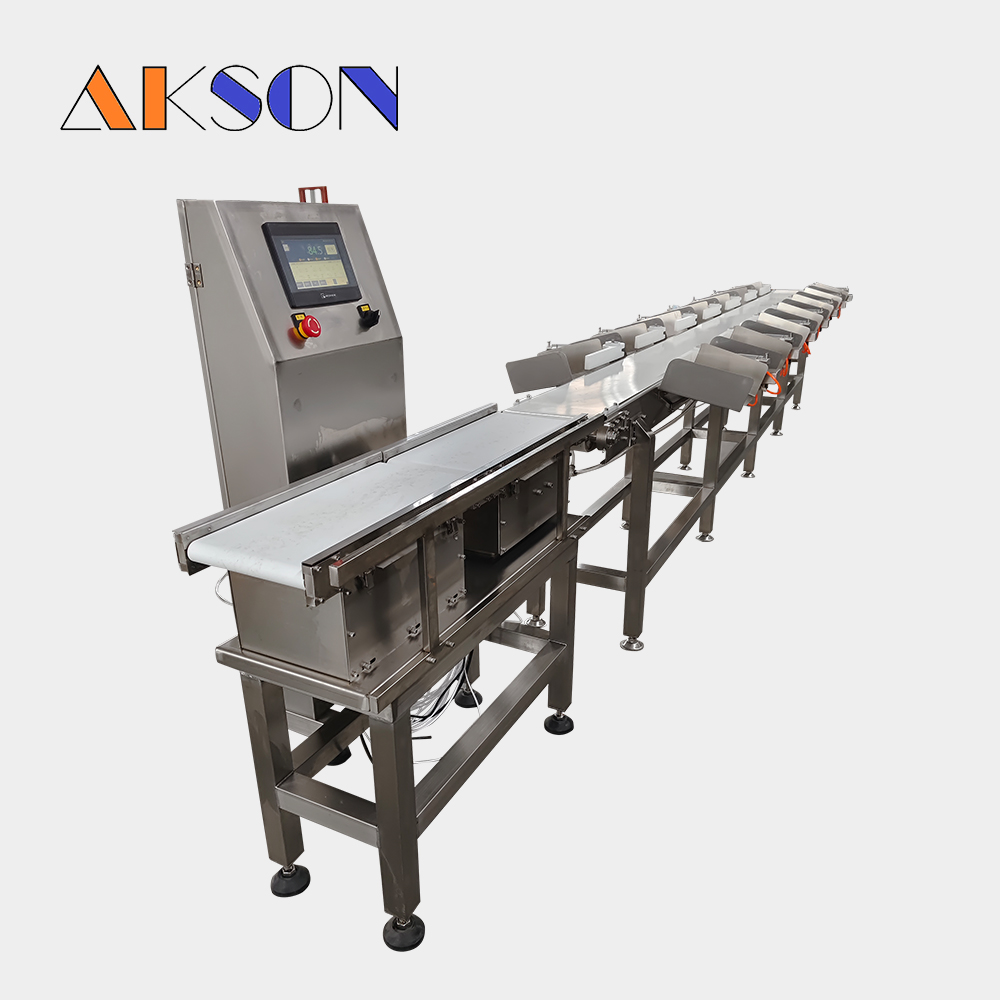
Weight sorting machine for

What is a belt-type weight sorting system?
It is an integrated, PLC-controlled automated system. It performs continuous, in-line weight verification. Additionally, it handles dynamic product diversion. Products move onto a motorized conveyor belt. They travel through a precision weighing zone. This zone contains high-resolution load cells. Typical accuracy reaches ±0.5 g or better. Next, the system evaluates each product. It checks against preconfigured weight thresholds. Or it uses grading criteria. Then it automatically directs the product. It uses pneumatic ejectors, pusher arms, or flip gates. Consequently, products go to designated discharge chutes or downstream lines. The entire process needs no manual intervention. Only periodic oversight and routine maintenance are required.

Core operational principle (three-stage sequence):
First, automated weighing occurs. Products travel uniformly along the conveyor. They reach a stabilized weighing zone. Calibrated load cells capture real-time mass data. This data has high repeatability. It also minimizes vibration-induced noise.

Second, intelligent decision logic activates. An embedded PLC compares measured weight instantly. It checks against user-defined parameters. These include upper/lower tolerance limits. Also multi-tier grade bands exist (e.g., Grade A/B/C). Or pass/fail criteria apply. Consequently, the PLC determines the appropriate sorting action.

Third, high-speed sorting executes. The product reaches the designated decision point. Then the system actuates the chosen ejection mechanism. It diverts the product to its assigned destination. Thus, traceability and consistency improve. Zero cross-contamination between categories occurs.

iPad-Pro

Industry Applications:
Food Processing: This system is essential for portion-controlled items. Examples include poultry cuts, fish fillets, and steaks. Visual and functional uniformity directly impacts consumer perception. Regulatory compliance also depends on it. Therefore, the system ensures 100% in-spec packaging. It rejects underweight or overweight units. This happens before final sealing.

Hardware & Fasteners: The system enables reliable weight-based packaging. It handles screws, nuts, washers, and small components. Consequently, it replaces error-prone piece-counting methods. It also eliminates “short-count” incidents. These incidents occur in retail or OEM shipments.

Personal Care & Household Chemicals: The system verifies fill levels. It checks toothpaste tubes, facial cleansers, and skincare bottles. Then it identifies underfilled units. It removes them automatically. Thus, it upholds net quantity declarations. It also avoids noncompliance penalties.

Pharmaceuticals & Electronics: The system supports GMP-aligned weighing. It handles tablets, bottles, and precision components. Batch-level weight conformity is mandatory. Quality assurance requires it. Audit readiness depends on it.

iPad-ProOperational Benefits:

Labor Efficiency: The system reduces dedicated sorting personnel. Previously, a line needed 2–3 people. Now only one operator remains. This operator monitors the system and replenishes materials. Consequently, labor costs drop by more than 50%.

Throughput Enhancement: The system achieves sorting rates of 120–200+ units per minute. Therefore, it represents a 3–5× improvement over manual methods.

Quality Consistency: The system replaces subjective visual estimation. It uses objective, repeatable metrology. Thus, variability disappears. Customer complaints decrease. Product quality metrics stabilize.

Data Traceability: The system automatically generates reports. These are time-stamped and auditable. They include daily production volume. Also pass/fail rates appear. Weight distribution histograms and deviation statistics are included. Consequently, they support continuous improvement. They also meet regulatory documentation requirements.

Conclusion:
The belt-type weight sorting system is neither proprietary nor overly complex. It is a mature, standards-compliant automation solution. Engineers have designed it for reliability. It offers precision in weight-based sorting. Moreover, it integrates seamlessly into modern production lines. Manufacturers face inefficiencies, inconsistency, or scalability limitations. For them, this technology delivers measurable ROI. It enhances productivity. It reduces waste. It strengthens compliance posture. It elevates product quality. Consequently, the system automates a traditionally variable process. It transforms sorting from a bottleneck into a value-adding quality gate. Furthermore, it frees human capital for higher-value tasks. Thus, every unit meets specification. Every time.
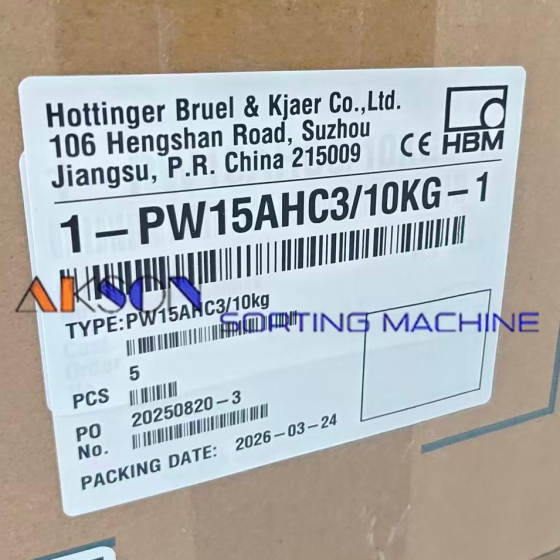
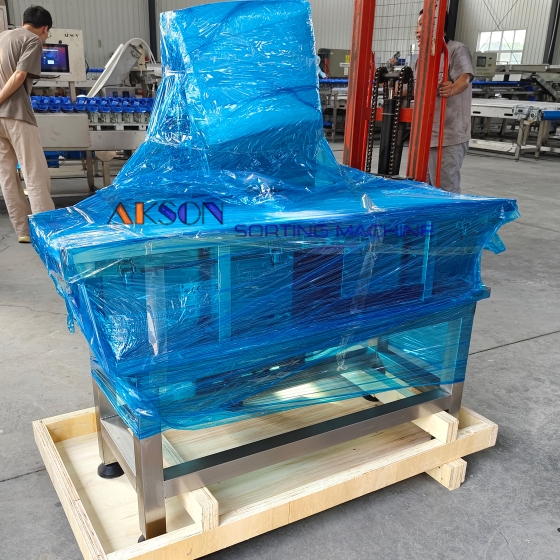
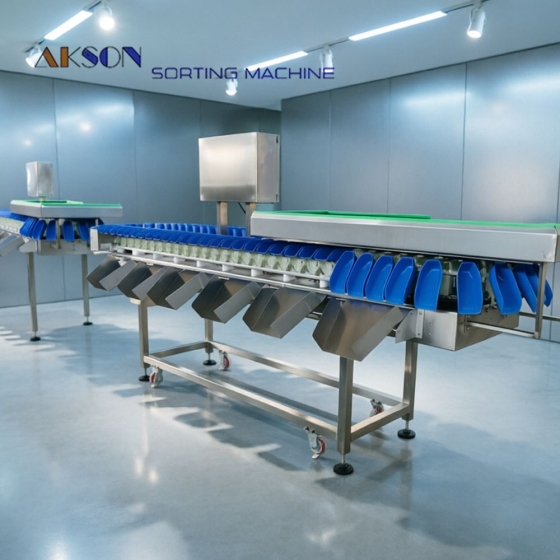
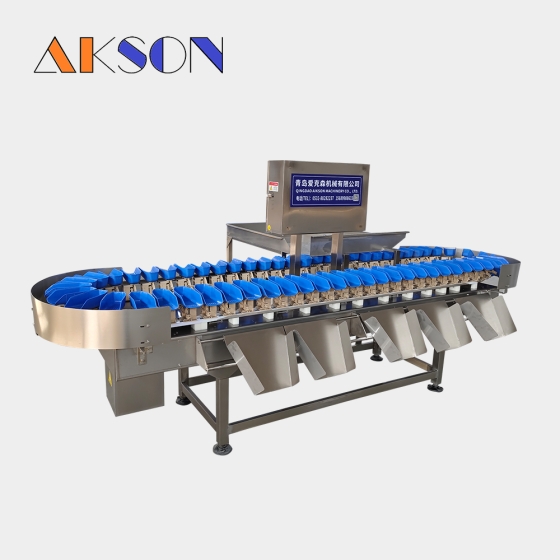
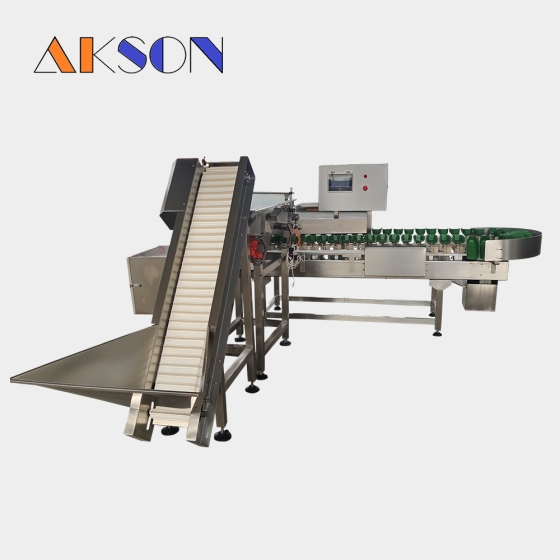
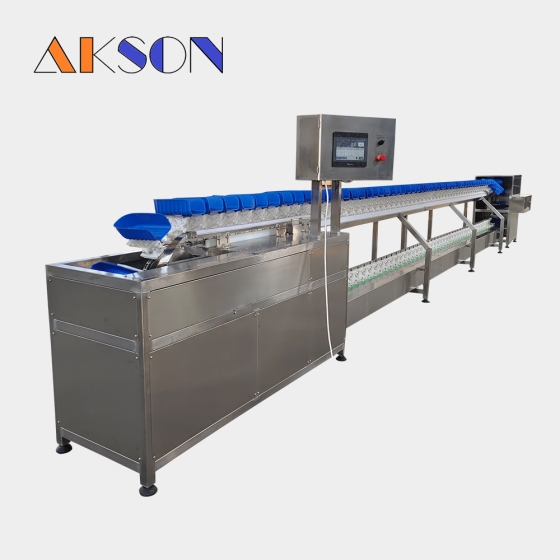
The weight sorting machine is an automated device installed on a production line that automatically weighs and sorts products by weight, or rejects defective products, during rapid product movement.

Simply put, it's like a combination of a highly accurate and fast-responding "smart scale" and a "sorter."

1,The weight sorting machine typically consists of 4 parts that work together to automatically weigh and sort products:

1.1,Conveying device: This device smoothly and evenly feeds products one by one into the weighing area via a conveyor belt or (tray), ensuring that only one product is weighed at a time.

1.2,Weighing device: This is the core component. As products pass through high-precision weighing sensors, the system quickly captures dynamic weight data and sorts them against preset standard values.

1.3,Sorting device: Based on the weight data and PLC judgment results, the actuator quickly moves to push, blow, or push away the graded products, while other products continue to the next process.

1.4,Control system: This is usually an industrial computer with a touchscreen, used to set parameters, display data in real time, calculate output, and store formulas for different products, facilitating production switching.

What exactly can the weight sorting machine produced by Qingdao Aikson Machinery Co., Ltd. do?

2,This machine has very practical functions, mainly reflected in the following aspects:

2.1,Removing "unqualified" products to ensure quality: This is the most basic function. It ensures that the weight of every product leaving the factory meets the standards.

2.2,Grading products for refined sorting: This is a more advanced function. It can automatically sort products of different weights into different grades. For example, a batch of chicken legs or seafood of varying sizes can be divided into small, medium, and large grades according to weight, and packaged separately to meet different market and price demands.

2.3,Feedback control to save money from the source: It can feed back real-time weighing data to the front-end steamed bun forming machine, filling machine, or packaging machine. If it finds that the products are generally too heavy, the system will automatically adjust the front-end equipment to reduce the filling volume. While ensuring product quality, it avoids waste of raw materials, saving a considerable amount of costs in the long run.

Q: When will you arrange the production for the weight sorting machine?
A: We usually arrange shipments immediately after receiving your payment if the weight sorting machine is in stock (about 2-3days). Otherwise, please confirm with us for the lead time (typically 15–30 working days).

Q: What is your accepted payment type for the weight sorting machine?
A: By TT, L/C. Usually, we would choose TT.

Q: Which logistics forwarders do you usually work with for shipping the weight sorting machine?
A: We usually compare the transportation time and price, and try to cooperate with the best transportation companies. You may also assign your own forwarder for shipment.

Q: What if the weight sorting is not sorting accurately?
A: 1. Check to ensure the product is within the rated weight range of the sorter.
2. Check to ensure the sorter is placed on a stable, vibration-free surface.
3. Check whether there are any foreign objects on the detection platform, or if there are any foreign objects on the weight sensor.
4. Check if the weighing platform has returned to zero, and view it on the touchscreen screen.
5. Check to ensure environmental factors (e.g., strong air flow, temperature fluctuations) are minimized.
6. Try recalibrating the sorting machine following the user manual instructions.
7. Restart the machine. If the problem persists, please contact our technical support for troubleshooting or warranty service.

Q: How does the weight sorting machine's sorting speed compare to manual weighing?
A: It depends on the model and product size, but a weight sorter typically sorts at a much faster rate (e.g., 10–120 pieces per minute) compared to manual weighing, with higher consistency.

Q: What is the sorting speed and accuracy of the weight sorting machine?
A: Sorting speed varies by model, ranging from 1 to 120 items per minute. Accuracy is typically within ±0.5g to ±2g, depending on the weight range and environment.

Q: What power supply should I use with the weight sorting machine?
A: Ensure the power supply matches the sorter’s rated voltage (e.g., 220V/50Hz) and provides sufficient current (typically 2A–10A). Using an incorrect power supply may damage the control unit. Or please provide your power voltage, and we will re-provide you with the electronic control system.

Q: Can I use a different conveyor belt instead of the one that comes with the weight sorting machine?
A: Yes, other compatible conveyor belts can be used, but to ensure optimal weighing accuracy and safety, we strongly recommend using the original belt specified by the manufacturer.

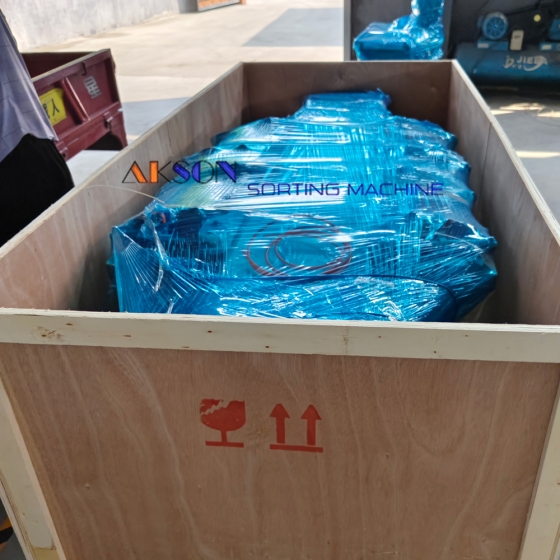
All of our fiber optic cable package are with export wooden drum. Indoor FTTH cable’s wooden dimension is 50x50x32cm, delivery length 3km/drum, Outdoor fiber optic cable’s wooden dimension is 110cm*110cm*70cm, 0.85CBM, can be load about 33 drums for a 20GP.Also accept custom cable drum from customers. welcome to contact us!

GYTS Direct Burial Single Armored Double Sheath Fiber Optic Cable

GYTS Fiber Optic Cable Picture

Prev:

Next:

Leave a Reply

Leave a message